
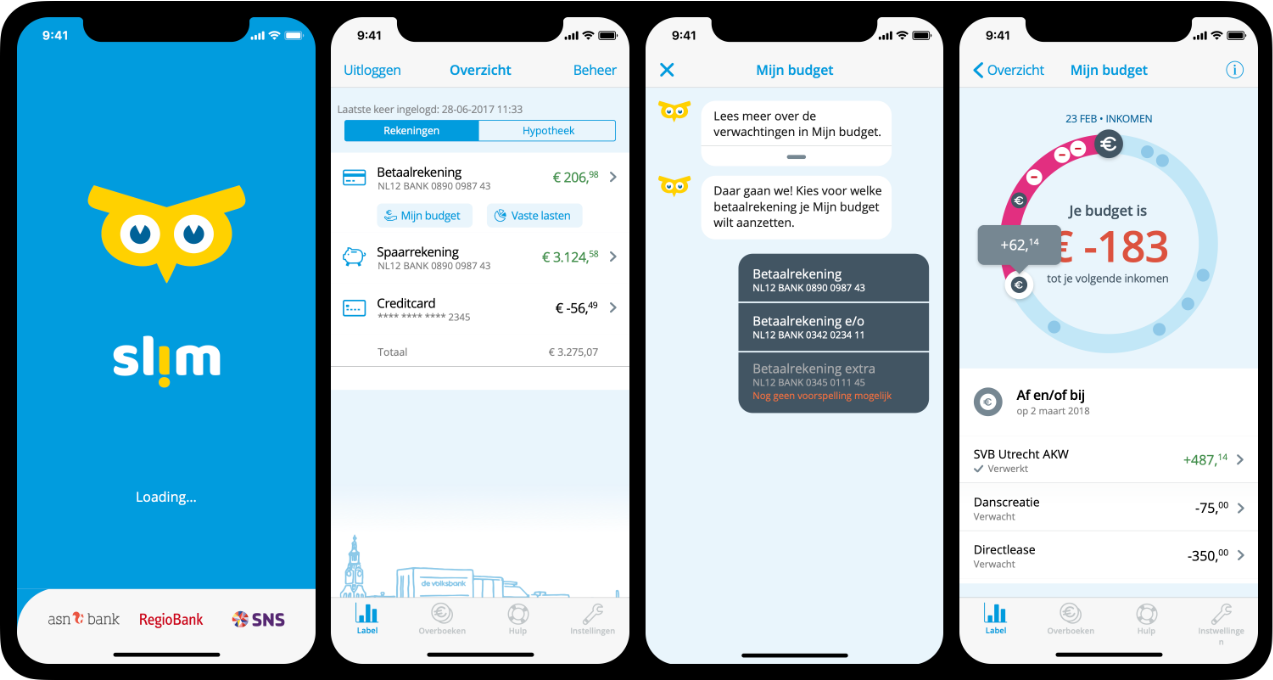
Mobile Banking app
Client
All brands of de Volksbank (SNS Bank, ASN Bank and RegioBank)
Role
Information Architecture, Interaction, Prototyping, Visual Design, User Testing
Project time
2011 – 2018
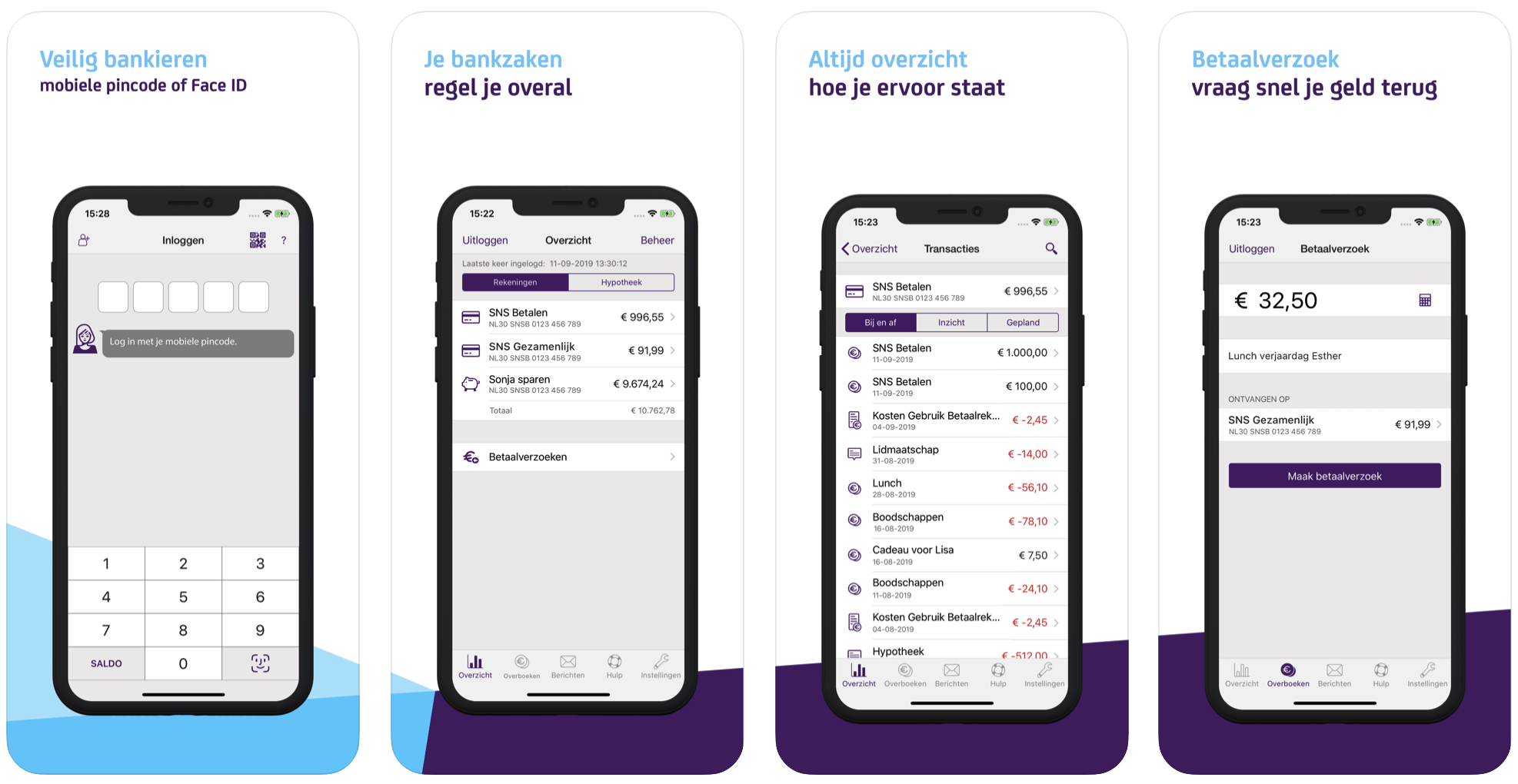
In the evolving landscape of mobile banking, my seven-year tenure as the lead UX Designer was a journey of innovation and customer empowerment. Tasked with developing a unified mobile banking solution for de Volksbank’s three brands, this project was more than just a design exercise, but a mission to empower customers to manage their finances more effectively. The dedication to innovation and user-centric insights of the team led us to introduce features that redefined the industry standard. Features that were subsequently adopted by our competitors, affirming their value and our role as trendsetters. The complexity of this project would not always be obvious on the surface, but a lot was hidden behind the interface, that was always kept as simple and intuitive as possible.
Disclaimer: I had to leave most of my materials, artefacts and designs behind when I switched jobs. I don’t have a lot to show for my work except what I can find by searching the web myself. This greatly impacts the quality of the examples I want to show here.
The Adventurous Beginning
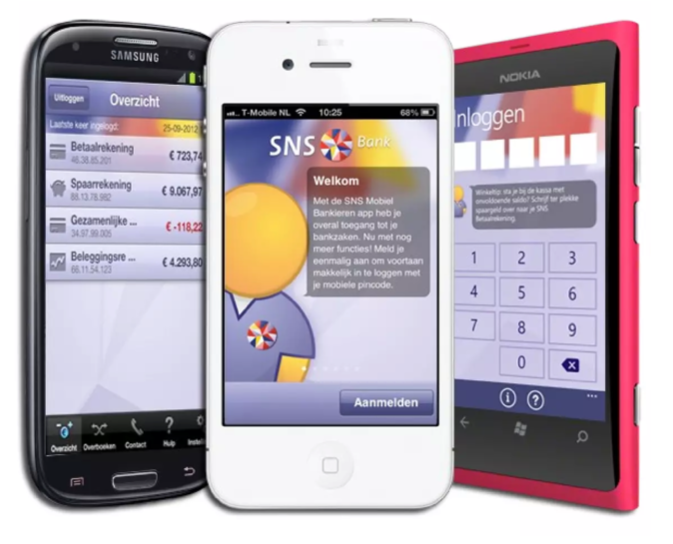
In the early days of mobile technology, guidance was scarce. My previous successes in e-commerce and transitioning bank processes online were a starting point, but mobile was a new frontier for us. Our approach? Conducting comprehensive competitive analyses across various sectors to inform our design process. We were determined to make mobile banking accessible to every customer, regardless of their device. This led to a partnership with Service2Media, enabling us to develop an app that could be deployed across multiple platforms.
A Diverse Role
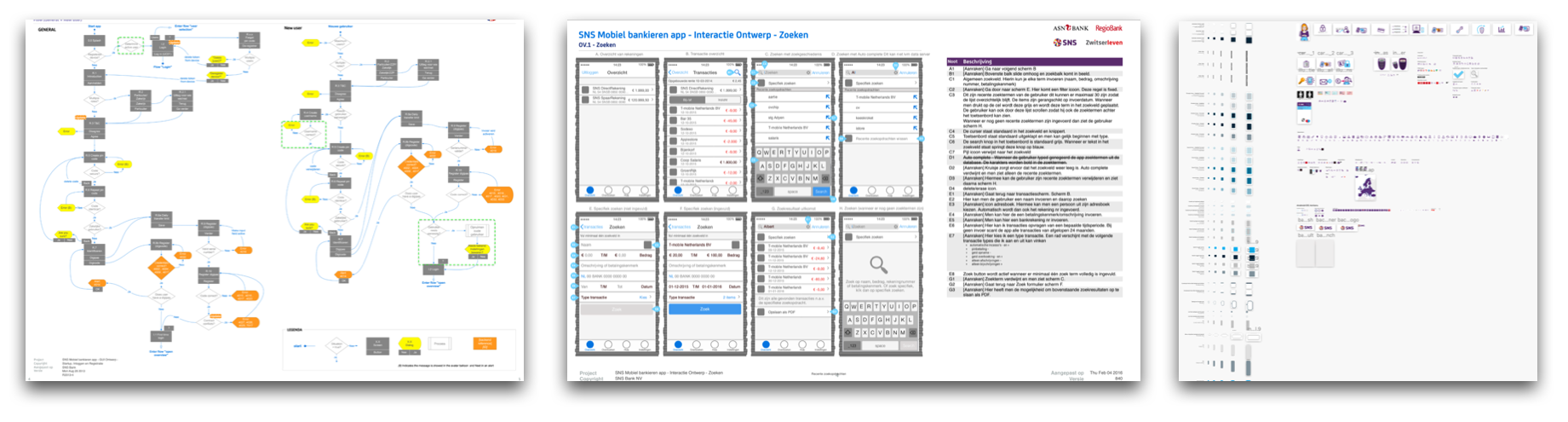
As the first UX Designer on this project, my role varied, sometimes working solo, other times leading a small team. My responsibilities spanned sitemaps, information architecture, flows, style guides, visual designs, interaction designs, prototyping, future envisioning, asset creation, iconography, release materials, and user testing. Along with the maturing field of mobile app design, I too evolved as a UX Designer.
Key Highlights
Managing Stakeholder Interests
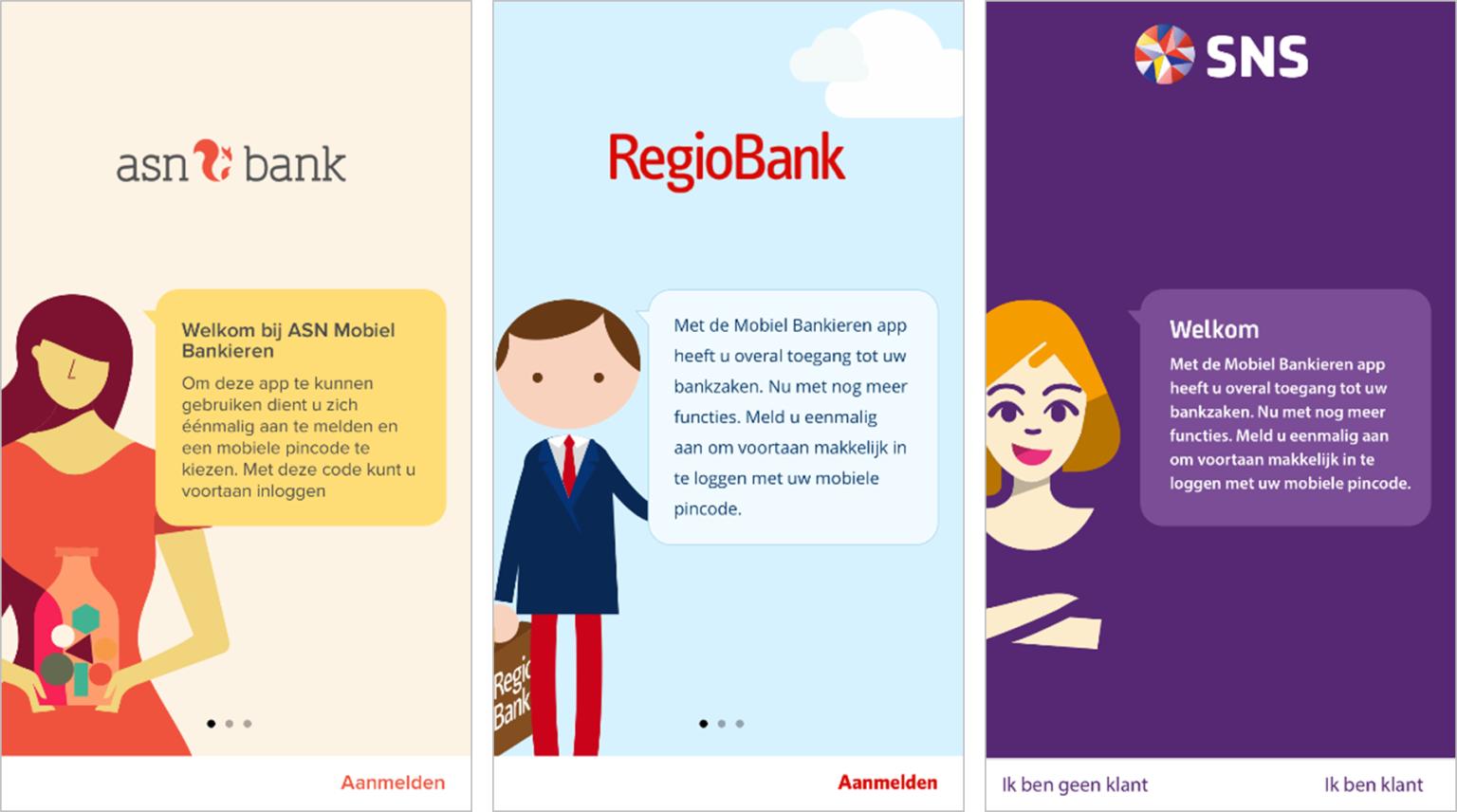
The challenge of a “single codebase multi-brand” app was not just technical, balancing speed with stakeholder support was critical as well. The diverse customer segments and value propositions of the brands often led to conflicting visions. By including key stakeholders from each brand in early discovery and development stages, and conducting bi-weekly check-ins, we struck a balance between autonomy and organizational support. Gradually, using more customer data to support our decisions built trust and reduced misalignments.
The Voice of the Customer
User involvement was crucial at every stage. From the initial usability tests with paper prototypes to pioneering mobile user research with makeshift recording setups, I learned to value user feedback above all. This humility in design led to earlier user involvement and eventually to co-creating some of our most valuable features, directly with customers.
A Single App for Multiple Brands
Our collaboration with Service2Media allowed us to develop a single app deployable across Apple iOS, Google Android, Microsoft Windows Phone, and Blackberry, resulting in 12(!) distinct app releases. After an initial successful 6-month launch, we faced limitations with the S2M platform that prompted us to rebuild the app from scratch, moving away from Blackberry and focusing on native apps for better alignment with Android and iOS guidelines.
Results and Learnings
When I left the project to become part of the innovation department at de Volksbank, the apps got a solid 8,5 on a 10-point scale on customer satisfaction surveys.
My experience with the mobile banking apps came in handy with one of my next project: Creating a beta app “Sl!m” for de Volksbank, where we could deliver and iterate innovation even faster to a customers segment of early adaptors.
Takeaways:
- Adaptability and Innovation: The journey demonstrated the importance of adapting to evolving technologies and customer needs, driving continuous innovation.
- User-Centric Design: The central role of user feedback in shaping design decisions underscored the value of a user-centric approach.
- Brand Integration: Successfully integrating multiple brands into a single app solution showcased the power of strategic design and stakeholder collaboration.
Other work

Guldn
Finding opportunity through rapid prototyping in the financial resiliance space.